Rough Around the Edges: Why Releasing Unfinished Music Is the Smartest Thing an Artist Can Do Right Now
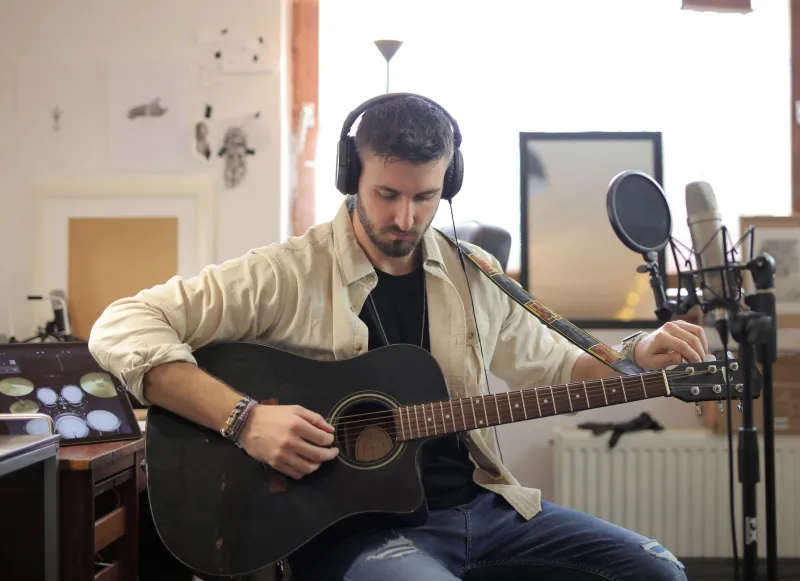
There's a voice memo on your phone right now — or maybe buried in your DAW — that you've never played for anyone. It's rough. The mix is off. The bridge isn't finished. You've told yourself you'll come back to it when it's ready.
What if ready is overrated?
A growing number of artists are scrapping the idea that music has to be finished before it's shared. They're releasing demos. They're posting voice memos. They're dropping rough cuts on Patreon or Discord with nothing but a timestamp and a note that says "still working on this." And their fans are eating it up.
This isn't laziness. It's a deliberate creative and business strategy — and it's working in ways that a perfect, polished rollout often doesn't.
The Skepticism Problem
Here's something that doesn't get talked about enough: audiences are more skeptical than they've ever been.
Decades of overproduced pop records, label interference, and manufactured personas have made listeners genuinely suspicious of the finished product. When everything sounds perfect, people start wondering what's real. They question whether the artist actually wrote it, whether the emotion is genuine, whether the person they're connecting with actually exists behind the brand.
Sharing unfinished work cuts through all of that in about thirty seconds.
When you hear an artist singing into their phone at 2am, voice cracking, lyrics not quite there yet — you believe them. There's no way to fake that kind of vulnerability. The imperfection is the proof. It says: this is actually coming from somewhere real.
For audiences who've grown tired of the smoke and mirrors, that kind of transparency is genuinely refreshing. It doesn't just build trust — it creates a specific kind of loyalty that finished, professional releases rarely achieve on their own.
Multiple Touchpoints, Multiple Moments
From a pure strategy standpoint, the unfinished album approach is a content multiplication machine.
Think about the traditional release model: you make the album in private, you drop it, you promote it for a few weeks, and then you move on. One moment. One shot at attention.
Now think about what happens when you document the process. You share the demo. Fans react. You post an update — "changed the hook, here's why." More reaction. You drop a voice note of you figuring out the bridge in real time. Engagement spike. You release the finished version. And now every single person who followed the journey feels like they helped build it.
That's not one release moment. That's a dozen. And each one generates its own conversation, its own shares, its own emotional investment from the audience.
The finished song, when it finally arrives, lands differently for people who've been along for the ride. They're not just listeners — they're witnesses. And witnesses don't just stream a track. They tell people about it.
The Revenue Angle Nobody's Talking About
Let's get practical for a second, because this strategy also opens up revenue streams that a traditional release model simply doesn't.
Platforms like Patreon, Bandcamp, and even Discord memberships are built for exactly this kind of tiered access. You can offer your general audience the polished final product while giving paying subscribers access to the demos, the rough cuts, the voice memos, the studio session footage. The unfinished work becomes premium content — not because it's worse, but because it's more intimate.
Some artists are taking it further. Limited NFT drops of original demo files. Handwritten lyric sheets sold alongside rough recordings. "Work in progress" listening sessions where fans literally hear a track evolve over multiple weeks.
The key insight here is that the creative process itself has value. Not just the output — the journey. And once you start treating that journey as a product, a whole new set of monetization options opens up.
Demystifying Without Diminishing
One concern artists often raise about this approach is that showing too much of the process makes the magic disappear. If people see how the sausage gets made, will they still care about the sausage?
The evidence says yes — and then some.
There's a difference between demystifying and diminishing. Showing your process doesn't make the finished work less impressive. In most cases, it makes it more impressive. When fans understand how much went into something — how many versions were scrapped, how a lyric evolved, how a beat was rebuilt from scratch — they develop a deeper appreciation for the final product.
The artists who've built the most passionate communities over the last several years are almost universally the ones who've been transparent about their creative lives. They've let people in. And that openness doesn't make fans take the work for granted — it makes them value it more.
A Word on Intentionality
This strategy only works if it's genuine. If you're sharing rough cuts purely as a marketing tactic, with no real vulnerability or transparency, audiences will sense it immediately. The whole point is that unfinished work feels real. The moment it starts feeling calculated, it loses its power.
The artists doing this well aren't thinking about it as a content strategy first. They're sharing because they genuinely want to connect, because they're excited about something they're working on, because they want feedback, or because they believe their fans deserve to see the real process.
The business benefits are real, but they're a byproduct of authenticity — not a replacement for it.
So if you've got a voice memo sitting on your phone that you think isn't ready yet — maybe it is. Maybe "ready" just means something different now.