Log Off, Make Art: Why the Best Music Happening Right Now Comes From Artists Who Stopped Chasing the Algorithm

Photo by Photo by Vadim Art on Unsplash on Unsplash
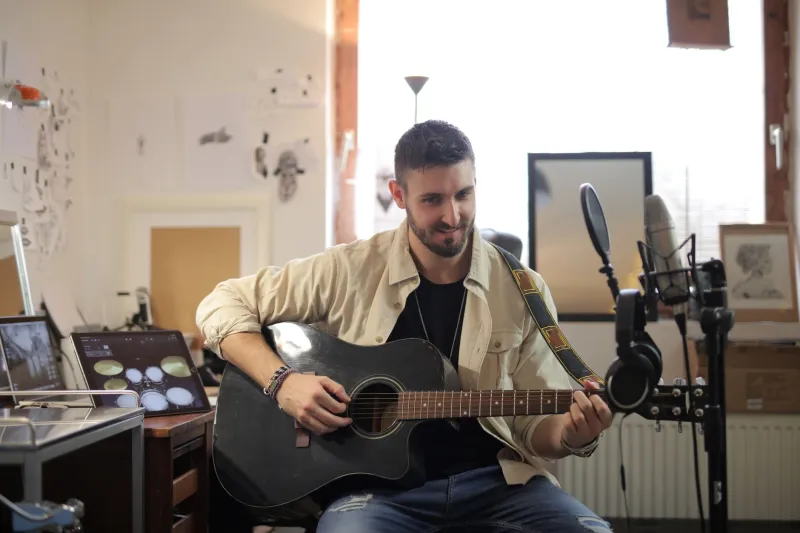
Somewhere between the third Reel you posted this week and the anxious scroll to check whether it broke 10,000 views, did you actually write anything? Did you sit in a room with your instrument and just... play? No camera. No caption. No trending audio layered underneath. Just you and the music.
For a lot of working artists in 2024 America, that question lands somewhere uncomfortable. Because the dirty secret of the content-creation era is this: the algorithm and the muse are not friends. They have competing interests. And when you spend your creative energy optimizing for one, the other tends to go quiet.
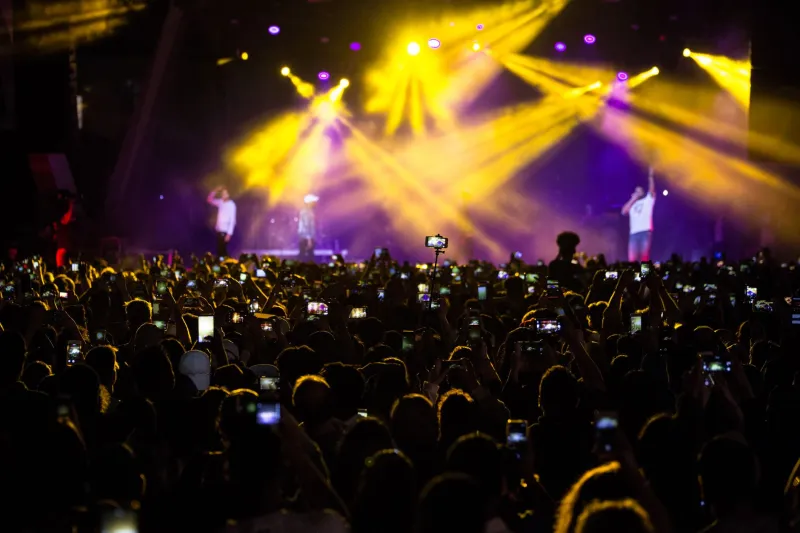
A quiet but real movement is building among musicians — producers, songwriters, indie artists, even some bigger names — who are making a deliberate choice to step back. To detox from the metrics. To make music that isn't pre-shaped by what TikTok rewarded last Tuesday. And the results, by most accounts, are speaking for themselves.
The Creative Cost Nobody Talks About
The conversation around social media and mental health in music tends to focus on anxiety, comparison culture, and burnout. Those are real and worth discussing. But there's a subtler damage that gets less attention: the slow erosion of creative instinct when every artistic decision gets filtered through the question of "will this perform?"
Producers who work with emerging artists describe watching this happen in real time. One Nashville-based producer — who works primarily in the country-adjacent Americana space and has production credits on several critically praised independent records — put it bluntly in a recent conversation: "I've had artists come into the studio and they're basically pitching me their song before they sing it. Like, 'this is the hook, it hits at the seven-second mark, there's a moment here that'll work for a loop.' And I'm sitting there thinking — but is it a good song? Do you love it? Because I can't hear that anymore."
That's not a knock on those artists. It's a structural problem. When the metrics of success are immediate, visible, and publicly attached to your identity, the creative brain adapts. It starts writing for the dashboard instead of the feeling.
What Unplugging Actually Looks Like
The algorithm detox isn't a uniform thing. For some artists, it's a few weeks away from posting while they're deep in an album cycle. For others, it's a more fundamental restructuring of how they relate to social media as a whole — showing up less, sharing less, protecting the creative process more aggressively.
A bedroom pop artist based out of the Pacific Northwest described going completely dark on Instagram and TikTok for three months earlier this year while working on her second project. "The first two weeks were genuinely uncomfortable," she admitted. "I kept reaching for my phone to document things. A cool chord progression, a lyric I liked — my instinct was to share it immediately. When I stopped doing that, it felt like I was sitting with things longer. And the songs got better. I don't know how else to explain it."
Her experience tracks with something that a lot of creative professionals across industries have described: the act of sharing something publicly, even informally, changes your relationship to it. It closes a creative loop prematurely. The idea becomes a post before it becomes a fully realized thing.
Trending Sounds and the Homogenization Problem
There's a broader cultural argument to be made here, and it's one that music critics and industry observers have been circling around for a few years now: are the charts getting blander because artists are optimizing for the same algorithmic signals?
Look at the sonic landscape of TikTok-born hits over the past three years. There are patterns — tempo ranges, song lengths, specific structural choices around hook placement — that reflect not just artistic preference but platform conditioning. Artists and their teams are making creative decisions based on what the algorithm has historically rewarded. That's rational behavior. It's also, arguably, slowly squeezing the weird and the unexpected out of popular music.
The artists pushing back against this aren't necessarily making a political statement. Many of them are just following their gut toward something that feels more honest. But the cumulative effect of enough artists making that choice is a more diverse musical landscape — one where the next genuinely surprising record has room to exist.
Think about the albums that have genuinely moved culture in recent memory. The ones that felt like they arrived from somewhere unexpected, that didn't fit neatly into what was already charting. Those records almost universally came from artists who were operating with some degree of insulation from the content machine — either because they had the career security to ignore it, or because they were early enough in their journey that they hadn't been fully absorbed into it yet.
The Practical Case for Protecting Your Creative Space
This isn't an argument for career suicide. Social media is a real and necessary tool for independent artists, and pretending otherwise would be doing you a disservice. Visibility matters. Discoverability matters. The ZEB Official community is built on the idea that artists and fans connect through shared digital spaces, and that connection is genuinely valuable.
But there's a difference between using social media strategically and letting it colonize your creative process entirely. The artists navigating this most successfully seem to have found a version of the same answer: protect the making, distribute the result.
In practice, that can look like:
- Designating "dark" creative periods where you're in the studio or writing room with no posting obligations, even if that means going quiet for a few weeks.
- Separating your listening habits from your trending research. Listen to what you love. Let what's trending inform marketing decisions, not song decisions.
- Finishing things before sharing them. Resist the impulse to loop in audience feedback mid-process. Let the work be yours before it becomes content.
- Being honest with yourself about when you're creating and when you're performing creativity for an audience. Both have value. But they're different activities.
The Music That's Worth Making
Here's the thing about logging off: it's a little scary, and that's probably a sign you should try it. The discomfort of not knowing how something will perform — of making it anyway, because you believe in it — is the exact feeling that tends to precede the best work.
The algorithm will always have another trend. There will always be another sound to chase, another format to adapt to, another metric to optimize. But the artists who leave a real mark are usually the ones who, at some point, decided to stop running toward whatever was already there and started moving toward something only they could make.
Log off. Make that thing. We'll be here when you come back.