Fandom's Double Edge: When Your Most Loyal Listeners Start Running the Show
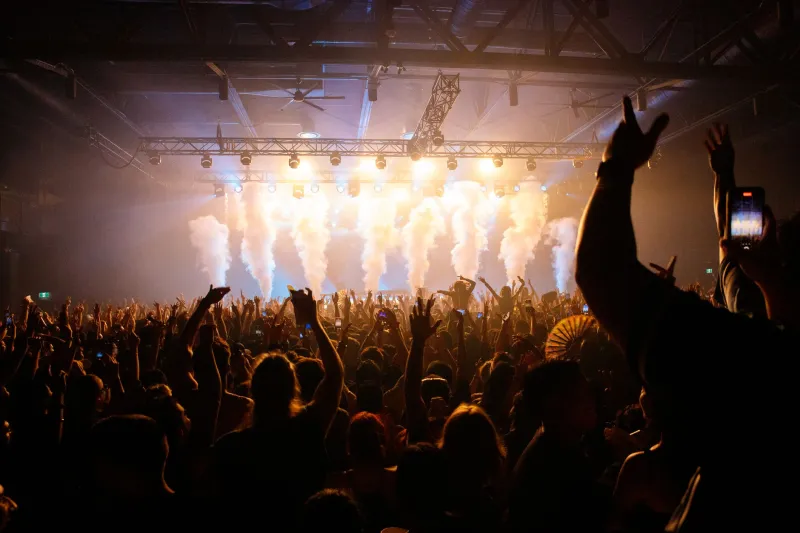
There's a version of fan loyalty that feels like pure fuel. The kind that fills venues, crashes presale servers, and turns a single into a cultural moment before any algorithm even notices. Artists chase that energy for years, and when they find it — when they've built a real community of people who genuinely care — it feels like the whole point of doing this.
And then the pivot happens. Or the experimental album drops. Or the artist just shows up to an interview looking different, talking different, moving in a new direction. And suddenly that same loyal base becomes the loudest, most organized opposition in the room.
The relationship between artists and their most dedicated fans has always been complicated. But something has shifted in the social media era, and the tension is more visible — and more consequential — than it's ever been.
When Love Becomes a Leash
Parasocial relationships aren't new. Fans have always projected onto artists, built identities around them, felt genuinely close to people they've never met. What's changed is the infrastructure. Now those feelings have a direct channel to the artist, and the artist has a direct channel back.
That constant connectivity creates intimacy, which is beautiful. It also creates expectation. And expectation, at scale, can start to feel like obligation.
Artists who have spent years being accessible — posting behind-the-scenes content, responding to comments, building parasocial closeness as a deliberate strategy — sometimes find that the community they've built has developed a sense of ownership over their creative decisions. Not maliciously, necessarily. Just as a natural extension of how close the relationship feels.
The problem is that the artist is a real person making real art, and real people grow. They change. They get bored. They want to try something different. And when they do, the community that was built on a specific version of them can react like something was taken from them.
The Stylistic Pivot Backlash Cycle
This plays out in a pretty recognizable pattern. Artist builds a following around a specific sound or aesthetic. Artist evolves — either gradually or all at once. Superfans mobilize online, declaring the new direction a betrayal. Streaming numbers dip on the new release. Think pieces get written. The artist either doubles down, reverses course, or weathers the storm until the audience catches up.
Sometimes the audience does catch up. Sometimes they don't.
What's notable is how organized these backlash moments have become. Fan communities — especially on platforms like X and Reddit — can coordinate quickly, flooding comment sections, tanking review aggregators, and generating enough noise to make a genuinely good creative decision look like a disaster from the outside. That's a new kind of power, and it doesn't always get used wisely.
The Accessibility Pressure
Beyond stylistic expectations, there's another constraint that doesn't get talked about enough: the pressure to constantly perform closeness.
Artists who build their brands on authenticity and accessibility create an implicit contract with their audience. Fans expect to be let in. They expect the DMs to feel personal, the Instagram stories to feel unfiltered, the interviews to feel honest. And when an artist pulls back — even just to protect their mental health, or to create some necessary distance — it reads as withdrawal. As coldness. Sometimes as betrayal.
This is an exhausting place to live. And it creates a dynamic where the artist's personal boundaries become a public negotiation.
Some artists have started setting those boundaries more explicitly, with mixed results. When they announce social media breaks or reduced engagement, the reaction from certain corners of their fan base can be genuinely alarming — proof that the parasocial attachment has tipped into something unhealthy for everyone involved.
What Artists Are Actually Navigating
It's worth being clear: most superfans are not toxic. Most of them are people who found something meaningful in an artist's work and want to stay connected to it. The problem isn't fandom itself — it's the way the current media environment amplifies the loudest voices and makes fringe reactions look like consensus.
Artists are navigating this in real time, with no real playbook. Some have started being more deliberate about the community culture they foster early on — setting expectations around growth and change before the audience gets locked into a fixed idea of who they are. Others are leaning into the tension directly, making the evolution part of the narrative.
A few have just gone quiet and let the work speak, which is maybe the oldest strategy in the book and still one of the most effective.
The Community That Grows With You
The artists who seem to navigate this best are the ones who've built communities around curiosity rather than comfort. Fans who signed up for the journey, not just the destination. That kind of audience is harder to build and takes longer to develop, but it tends to be more durable.
It also requires the artist to be honest about who they are and where they're going — not just in the music, but in how they talk about their work. When fans understand that change is part of the deal, they're less likely to feel blindsided when it happens.
Superfan culture is one of the most powerful forces in the music industry right now. It can make careers. It can also cage them. The artists figuring out how to hold both truths at once — to honor the community without being defined by it — are the ones building something that actually lasts.